
How to Register Your Songs for Collecting Royalties
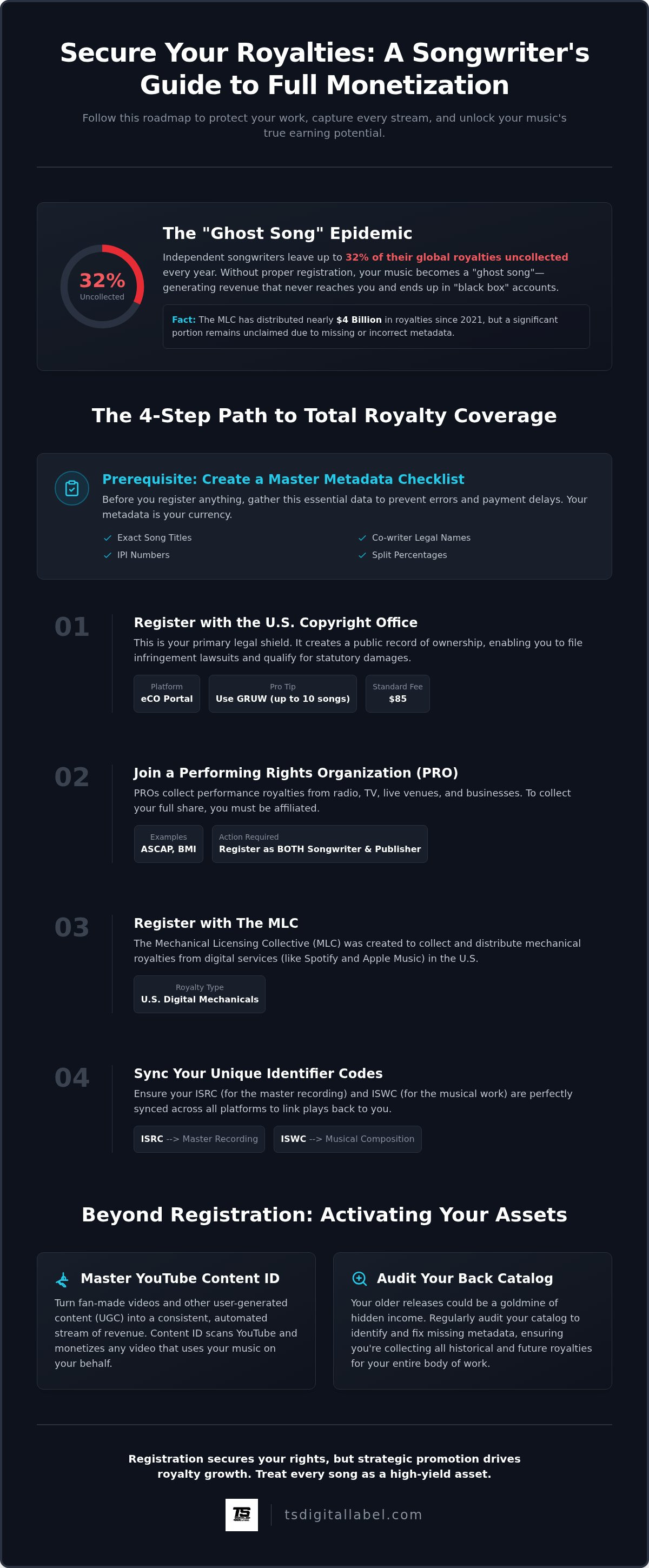
Did you know that independent songwriters leave up to 32% of their global publishing royalties uncollected every year because their administrative setup is incomplete? It's a staggering loss of income that stems from the common confusion between basic copyright and Performing Rights Organizations. You likely feel the weight of this complexity, realizing that to truly protect your career, you must register your songs through the correct legal channels. It is a gap that separates hobbyists from professionals who understand that visibility is only half the battle.
You deserve to be paid for every single stream. This guide provides the exact steps to secure full legal protection and automate your royalty collection so you never miss a payment again. We will show you how to navigate the U.S. Copyright Office, join the right PROs, and leverage The MLC to capture your share of the billions in royalties distributed annually. By the end of this article, you'll have a clear roadmap to protect your work and the strategic insight needed to scale your YouTube presence for maximum monetization.
Table of Contents
Why You Must Register Your Songs in 2026
The music industry in 2026 has transitioned into a data-driven ecosystem where ownership is verified by code, not just creativity. While copyright technically exists the moment you fix a melody in a tangible format, this "automatic" protection is insufficient for the demands of modern streaming. When you Register your Songs, you are essentially issuing an official identity card for your intellectual property. This formal record is what allows digital service providers and collection societies to recognize you as the rightful owner among millions of daily uploads.
Without this documentation, your music exists as a "ghost song." These are tracks that generate engagement and revenue, yet remain untethered to a verified owner in the global metadata databases. In 2026, the financial risk of remaining unregistered is higher than ever. The Mechanical Licensing Collective (MLC) has already distributed nearly $4 billion in royalties since 2021; however, a significant portion of "black box" income remains unclaimed because artists failed to link their names to their work correctly. Metadata is your currency. If the data is broken, the payment stops.
The Legal Protection of Your Intellectual Property
Formal registration with the U.S. Copyright Office creates a public record of your work that serves as a shield against plagiarism and unauthorized use. For independent creators, this is not a mere formality; it is a legal necessity. If a dispute arises, you cannot file an infringement lawsuit in U.S. court without a registration certificate. Furthermore, registering your work within three months of publication or before an infringement occurs qualifies you for statutory damages and attorney’s fees. Without this, you may only be entitled to "actual damages," which are often difficult to prove and rarely cover the cost of legal representation. Independent artists are frequently targeted for content theft because bad actors assume they lack the formal records to fight back.
Unlocking Global Royalty Streams
The decision to Register your Songs is the definitive line between a creative hobby and a scalable music business. Registration acts as the master key that connects your music to global collection societies, ensuring that a play in London or Tokyo results in a deposit in your account. Professionalism in 2026 requires treating every song as a high-yield asset. This involves:
Affiliating with a Performing Rights Organization (PRO) like ASCAP or BMI to capture performance royalties.
Registering with The MLC to secure mechanical royalties from U.S. streaming services.
Ensuring your ISRC and ISWC codes are perfectly synced across all administrative platforms.
By establishing this professional foundation, you move from hoping for revenue to commanding it. While registration secures your legal rights, the actual wealth is generated through visibility. You can leverage strategic growth services at TS Digital Label to ensure your registered works reach the high-CPM audiences that trigger these royalty streams.
Step-by-Step: How to Register Your Songs for Total Coverage
Achieving total royalty coverage requires more than just a single upload to a distributor. It demands a methodical approach to data management across several distinct organizations. Before you begin the digital paperwork, you must create a master metadata checklist. This document should include the exact song titles, the legal names of all co-writers, their respective IPI numbers, and the agreed-upon split percentages for both the composition and the master recording. Having this data ready prevents administrative errors that could lead to your royalties being held in "suspense" accounts for years.
Registering with the U.S. Copyright Office
The first step in securing your work is filing with the U.S. Copyright Office via the Electronic Copyright Office (eCO) portal. For most independent artists, the Group Registration for Unpublished Works (GRUW) is the most efficient choice, as it allows you to register up to 10 songs for a single fee. If you are registering a single work by one author, the process is even more streamlined. As of late 2026, the standard application fee for an online registration is $85. This certificate is your primary legal weapon, providing the public record necessary to defend your ownership in court.
Joining a Performing Rights Organization (PRO)
To collect performance royalties from radio, television, and live venues, you must affiliate with a PRO such as BMI or ASCAP. It is vital to understand the distinction between songwriter and publisher roles. If you are self-published, you should register as both to ensure you receive 100% of the performance income. Once your account is active, you must manually Register your Songs within the PRO dashboard. This process generates your IPI (Interested Parties Information) number, a unique nine-digit code that acts as a global fingerprint for your identity as a creator.
Don't Forget SoundExchange and Mechanicals
Many artists mistakenly believe that a PRO collects all streaming income. This is a costly assumption. You must also register with SoundExchange to collect digital performance royalties from non-interactive services like Pandora or SiriusXM. These royalties are paid to the performers and the sound recording owner, not just the songwriter. Additionally, you must register with The Mechanical Licensing Collective (The MLC) to claim mechanical royalties from streaming platforms like Spotify and Apple Music. The MLC has distributed nearly $4 billion since its inception, yet much of this remains unclaimed by artists who skip this step.
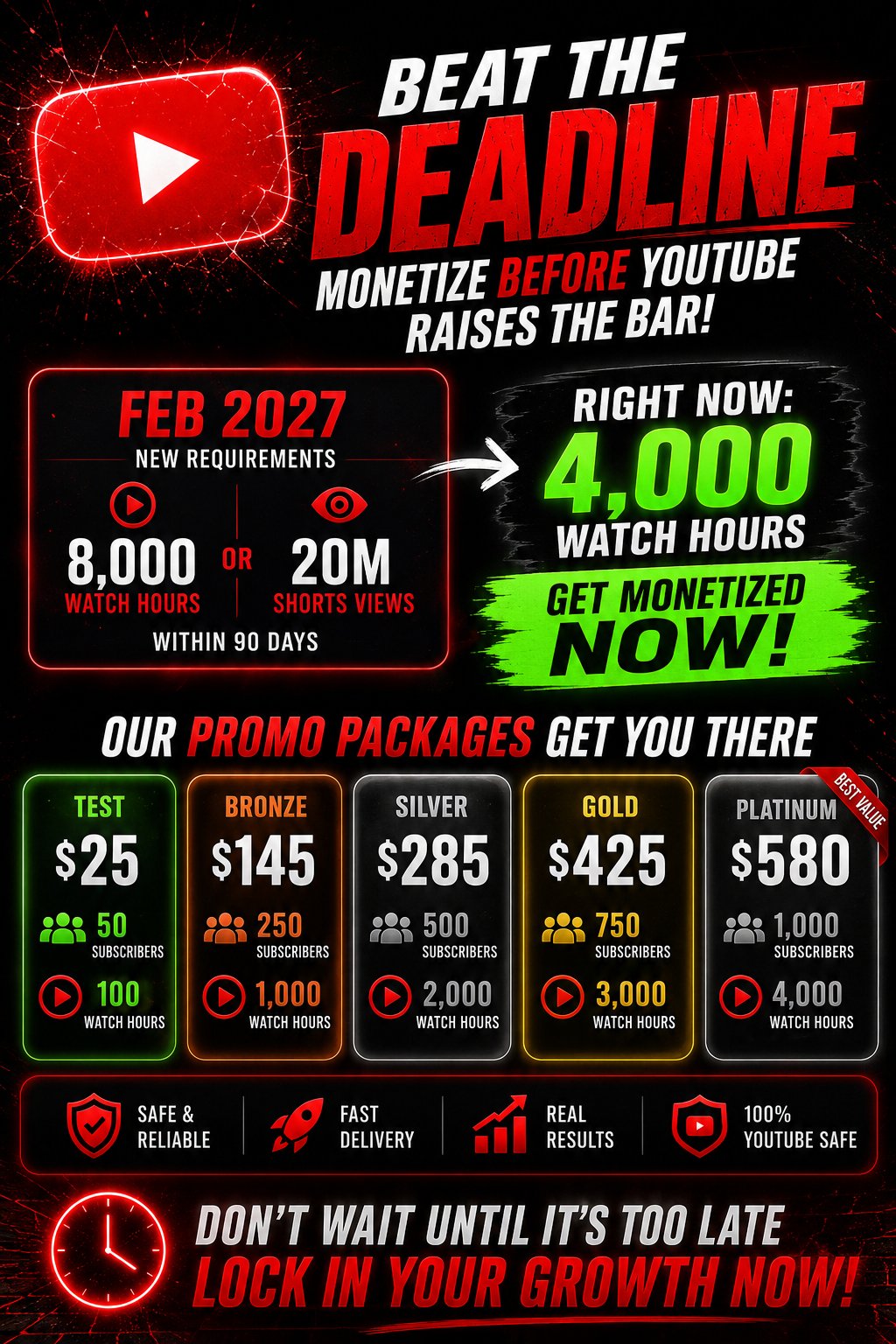
Once your administrative foundation is solid, the focus shifts to generating the data that triggers these payments. Utilizing professional services to reach YouTube monetization requirements can significantly accelerate your royalty growth by ensuring your registered works are being heard by high-impact audiences.
Understanding YouTube Content ID and Digital Royalties
YouTube Content ID is the digital gatekeeper of the creator economy. It functions as a sophisticated, automated system that scans every second of uploaded video against a massive database of audio files provided by copyright owners. When you Register your Songs through a distributor or publishing administrator, your music is "fingerprinted." This creates a unique digital signature that allows the platform to identify your work even if it is used as background music in a travel vlog, a gaming tutorial, or a viral dance challenge.
The true power of this system lies in its ability to monetize user-generated content (UGC). Rather than simply issuing a takedown notice, you can choose to let unauthorized videos stay live while redirecting the ad revenue to your own account. This turns your fan base into a distributed marketing team that pays you for the privilege of using your art. Without proper registration and metadata, these "claims" cannot be verified, leaving your potential earnings in the hands of the platform rather than your bank account.
How Content ID Protects Your Music
The fingerprinting process is highly precise. Once your audio is in the database, you have three primary options for managing unauthorized uploads: blocking the video entirely, tracking its analytics to see where your music is trending, or monetizing it for profit. It is vital to distinguish this from standard AdSense revenue. While AdSense pays you for views generated on your own channel, Content ID captures revenue from every other corner of the platform where your music appears. High-quality metadata is the bridge here; without accurate ISRC and ISWC codes, the system might fail to attribute the claim to your account, resulting in lost digital royalties.
Linking Registration to YouTube Growth
Your rights management strategy should work in tandem with your channel's organic growth. Registered songs provide a level of authority in YouTube's ecosystem that can help protect your channel from erroneous copyright strikes. However, to unlock the full suite of monetization features, including the ability to earn directly from your own views, you must meet the 4,000 watch hour threshold. Many artists struggle to reach this milestone through organic reach alone.
Using a targeted youtube ads service can accelerate this process by placing your music in front of high-intent listeners who are likely to engage with your content. This strategic growth ensures that by the time you Register your Songs, you have the audience volume necessary to trigger significant royalty payouts. You can explore these growth options further at TS Digital Label to ensure your administrative efforts are backed by real-world visibility.
Creating a Revenue Strategy for Your Song Backlog
Your past creative output is not just a collection of memories; it is a portfolio of financial assets waiting to be activated. Many artists focus exclusively on their upcoming releases, yet the most sustainable income often comes from a well-managed catalog. If you did not Register your Songs when they were first released, you have likely left years of global royalties on the table. Implementing a backlog strategy allows you to reclaim this lost revenue by ensuring every track in your history is correctly attributed to you in the digital infrastructure.
Consolidating your ownership and splits is the first step toward a professional catalog. In the early stages of a career, split agreements are often informal or entirely forgotten. This lack of clarity creates administrative friction that prevents collection societies from paying out. By formalizing these agreements now and updating your registrations, you create a clean, "investor-ready" catalog that can generate passive income for decades. This process transforms your archive from a stagnant list of tracks into a high-yield revenue stream.
Auditing Your Music Catalog
A comprehensive audit begins with identifying "orphan" songs. These are tracks currently available on streaming platforms that lack verified registration data at the PRO or MLC level. Use your ISRC (International Standard Recording Code) codes to track each song's history across different distributors. This data allows you to identify gaps where metadata might be missing or incorrect. Updating this information ensures that you can collect retrospective royalties, as many organizations hold unclaimed funds for several years before they are redistributed. Accuracy here is the difference between a hobbyist archive and a professional business asset.
Maximizing Revenue from Every Asset
Registration provides the legal framework, but visibility provides the cash flow. Once your backlog is fully protected, you can use "re-promotion" to drive new traffic to older hits. Strategic use of YouTube views can breathe new life into a music video or lyric track from three years ago, pushing it back into the platform's recommendation algorithm. This increased engagement does more than just generate immediate ad revenue. It builds your channel's overall authority and helps you reach the 4,000 watch hour threshold required for full monetization features.
Reviving an older catalog requires a professional touch to ensure your budget is spent on high-CPM targets. You can explore YouTube growth packages to specifically target audiences for your backlog releases. This approach ensures that your efforts to Register your Songs are met with the necessary traffic to trigger significant royalty payouts. Take control of your musical history today by visiting the TS Digital Label shop and selecting a promotion strategy that matches your career goals.
Beyond Registration: Turning Your Music into a High-Yield Asset
Completing the administrative paperwork is a significant milestone, but it is merely the beginning of your financial journey. When you Register your Songs, you have successfully secured the legal right to collect revenue; however, those rights remain dormant without audience engagement. Think of registration as the plumbing in a house. It is essential for the flow of resources, but if you don't turn on the tap, the pipes stay empty. For the independent artist, "turning on the tap" means generating the digital velocity required for platforms to recognize your work as a valuable asset.
Transitioning from a creator to a savvy business owner requires a shift in perspective. You are no longer just releasing tracks; you are managing a portfolio of intellectual property. To maximize the yield on these assets, you must trigger the specific thresholds that release royalty payments. This involves more than just organic sharing among friends. It requires a strategic, professional approach to visibility that ensures your registered works are placed in front of high-value audiences who drive meaningful data points.
The Role of Targeted YouTube Promotion
YouTube is a primary engine for royalty generation, but not all views are created equal. For artists looking to maximize their digital performance royalties, USA-targeted views are significantly more valuable due to their higher CPM (Cost Per Mille) rates. This geographic targeting ensures that the engagement your music receives translates into higher payouts from both AdSense and Content ID claims.
Speed is also a factor in the modern creator economy. The 4,000 watch hour requirement is a notorious bottleneck for many, yet hitting this milestone faster and more reliably is possible with a calculated advertising strategy. By using targeted ads, you create the momentum needed for algorithmic discovery. This process forces the platform's recommendation engine to take notice, leading to a cycle of organic growth that sustains your royalty streams. You can find specialized support for this stage by looking at how to Get Song Registration Services with TS Digital Label.
Scaling with TS Digital Label
Professionalism requires a partner who understands the hidden mechanics of digital platforms. TS Digital Label provides the high-impact promotion needed to trigger the royalties you worked so hard to register. By focusing on high-CPM targets and building a consistent monthly subscriber base, you ensure long-term stability for your career. This isn't about temporary "hype" but rather about building a foundation of recurring listeners who will engage with your future releases.
Your goal is to spend less time worrying about technical hurdles and more time on your creative output. When you Register your Songs and pair that protection with expert growth strategies, you take the guesswork out of the digital landscape. It is time to treat your music with the professional respect it deserves. Visit the TS Digital Label Shop to start scaling your channel and turning your catalog into a high-yield asset today.
Securing Your Legacy and Scaling Your Music Wealth
Navigating the administrative landscape of the music industry is no longer optional for those who view their art as a career. By establishing a public record of your work and aligning with organizations like the MLC and SoundExchange, you ensure that your metadata works as hard as your music does. When you Register your Songs, you lay the definitive foundation for a sustainable business model. However, legal protection is only the first half of the equation. The real transformation occurs when you pair that protection with strategic, professional growth.
TS Digital Label specializes in the high-impact promotion needed to trigger the royalty thresholds you've now secured. Our team consists of specialists in meeting YouTube monetization requirements, utilizing proven strategies for increasing watch time hours to move your channel toward profitability. We focus on USA-targeted views to maximize your high-CPM payouts, ensuring that every play counts toward your bottom line. Don't let your registered works sit in silence. It's time to Scale Your Registered Music with Professional YouTube Promotion and turn your creative output into a high-yield asset. Your career as a professional creator is ready for the next level.
Frequently Asked Questions
How much does it cost to register a song in 2026?
As of August 2026, the cost depends on the specific application type you choose. A Standard Application for a single work is $65, while a Group Registration for Unpublished Works (GRUW) costs $85 for up to 10 songs. You should be aware that the U.S. Copyright Office has proposed increasing the standard fee to $85. These costs are separate from any fees charged by publishing administrators for their specific collection services.
Do I need to register my songs with both BMI and the Copyright Office?
Yes, you must register with both to achieve full protection and maximum royalty collection. The Copyright Office provides the legal proof of ownership necessary if you ever need to sue for infringement. BMI, as a Performing Rights Organization, focuses on tracking and collecting your performance royalties from radio, streaming, and live venues. Skipping either step leaves you legally vulnerable or financially underpaid for your creative work.
Can I register my songs for free?
While the U.S. Copyright Office requires a fee for legal registration, joining a PRO is often free. Major organizations like BMI and ASCAP currently offer free registration for songwriters. Additionally, registering with The Mechanical Licensing Collective (The MLC) is free for all songwriters and publishers. These free options allow you to start collecting royalties, though they don't provide the same statutory legal protections as a formal copyright registration.
What happens if I don't register my songs before releasing them?
Releasing unregistered music puts your intellectual property at risk and delays your income. Without a formal registration, you cannot file an infringement lawsuit in U.S. court. You also miss out on the ability to claim statutory damages. From a financial perspective, failing to Register your Songs with the proper agencies means your royalties may sit in unclaimed accounts, eventually being redistributed to other artists after several years.
How do I register a song for YouTube monetization specifically?
To monetize your music on YouTube, you need to submit your tracks to a distributor that offers Content ID services. This process fingerprints your audio, allowing the system to identify and claim revenue from any video using your song. To unlock full channel monetization, you must also reach the 4,000 watch hour requirement. Professional promotion can help you hit these growth targets faster, ensuring your registered music generates maximum revenue.
Is a poor man's copyright valid in 2026?
No, poor man's copyright has no legal standing in 2026 and provides zero protection in a court of law. It's a persistent myth that mailing a copy of your work to yourself establishes ownership. The only way to secure the full benefits of copyright law, including the right to sue for damages, is through the U.S. Copyright Office. Don't risk your career on outdated and ineffective methods when formal registration is accessible.
How long does the song registration process take?
The timeline varies significantly between different organizations. Registration with a PRO like BMI or ASCAP usually takes a few weeks for your song to appear in their public database. In contrast, the U.S. Copyright Office can take anywhere from three to ten months to issue a final certificate. It's best to Register your Songs as early as possible to ensure your legal and financial protections are active before your music gains traction.
What is the difference between a song registration service and a PRO?
A PRO like ASCAP or BMI focuses specifically on collecting performance royalties from public broadcasts and streaming. A song registration service, or publishing administrator, handles a broader range of tasks. These services register your work with global collection societies, manage mechanical royalties through The MLC, and often handle YouTube Content ID claims. While a PRO is essential, a registration service provides a more comprehensive approach to capturing your global streaming income.


Great guide on maximizing royalty collection—especially the breakdown of PROs and The MLC, which so many indie artists overlook. It’s fascinating how precise the music industry has become with tracking ownership, much like how exact measurements matter in technical fields. For anyone dealing with design or manufacturing tied to music gear or studio setups, accurate MM to Inches metric length conversion can be just as crucial when sourcing equipment or building custom mounts.
With its focus on careful observation, That's Not My Neighbor creates a tense experience in which players must review documents, compare details, question suspicious visitors, and react quickly when something seems off.